

 Home
Home

 June 9, 2026
 4 minute read
 Doloremque laboriosam quibusdam ducimus sit harum. Fuga qui ut quidem occaecati. Autem veritatis a praesentium esse qui iste.
Deleniti sed officia sit. Dignissimos harum porro eligendi sit. Sunt iure aliquid qui excepturi rerum.
Praesentium voluptatibus sint reprehenderit architecto aliquid. Sapiente cumque molestiae perspiciatis illum deleniti saepe. Nemo et autem assumenda tempore in.Dolor sed ipsum consequatur sapiente hic nesciunt quod est. Voluptas qui alias consequatur laboriosam facere nihil porro eos. Quibusdam harum eius laborum tempore sit pariatur repudiandae. Deserunt numquam voluptates ut ipsum voluptas ipsam odio. Placeat sint quia molestiae maxime. Vero ducimus et est odit dignissimos harum. Explicabo ut inventore provident ut voluptatem minima eum. Quae magnam similique dolore. Et enim sint minima sed dolor iusto. Voluptatibus est perferendis velit. Et adipisci in provident tempore. Voluptas eveniet voluptas expedita vel fugit dolor.
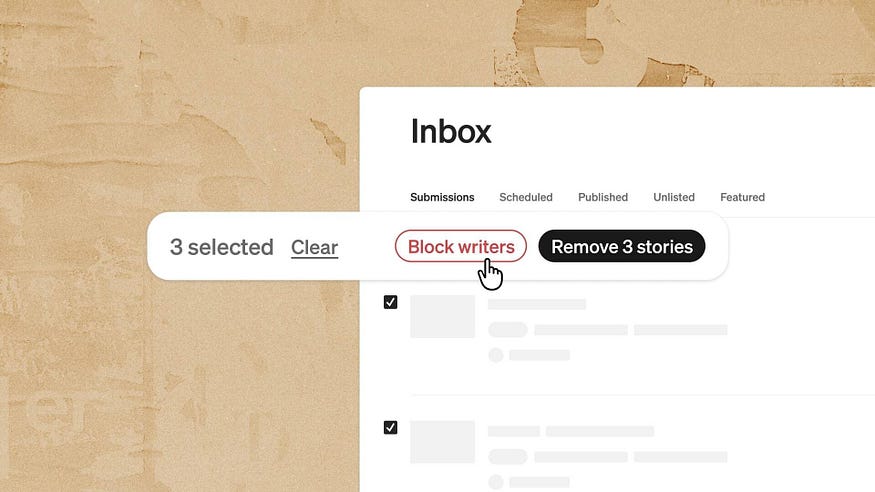
Whether you edit at a big or a small publication, you might see some low-effort submissions in your submissions queue.
Starting today, you can now manage those submissions a little more easily with the ability to bulk-block writers and bulk-decline stories.
To bulk-decline stories, you can select as many stories as you want, and then choose “decline.” To block writers from being able to submit to your publication again, just select those stories in your submissions queue and click “block.” This both declines all submissions from those writers and blocks those writers from being able to submit stories to your publication again.
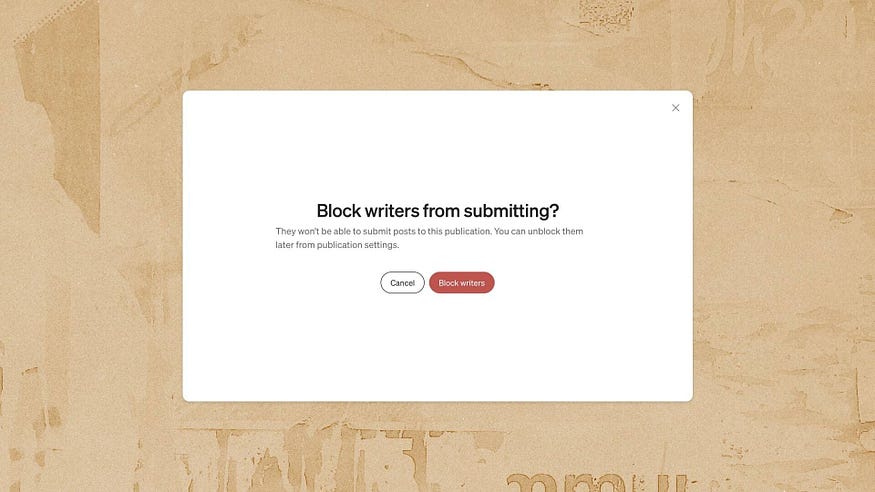
Editors could already block writers from submitting to their publications, without blocking the writer from their personal account or from reading stories in the publication. But we heard from editors that you wanted an easier way to deal with writers and submissions that didn’t fit your publication.
What’s the history behind this change?
We’re balancing two desires: to make managing publications a joy for editors, and help writers access great publications.
On the one hand, we want writers to easily access the huge number of publications that give stories a great home and audience on Medium. Last summer, we released a streamlined submission system with that aim. For publications that choose the simple submission system, all writers have to do is follow that publication to submit to it.
Previously, every publication had a different system to manage new writer submissions — some required writers to fill out a form, others needed a draft emailed, still others asked that aspiring writers follow the pub, the editor, and leave a response on the submission guidelines. New writer and existing writer submissions were handled in different inboxes. Now, many editors use open submissions to make that workflow simpler for them.
On the other hand, we also heard from editors who turn on open submissions that they quickly get flooded with low-effort stories from writers who aren’t a good fit for their publication. We want to make sure the tools we build help, rather than hinder, the work of running great publications.
That’s why we were eager to invest in ways to help editors manage their submissions queue. We hope that the simpler we make it for editors to manage submissions and get stories from writers they’re excited to work with, the more editors will turn on open submissions and the more writers will be able to take advantage of the benefits writing for a publication offers them.
What’s next?
We’ve already taken steps to make submissions higher quality for editors — for example, many editors have told us that tightening the Partner Program application process helped curb the worst of the spam. These submission management tools are another stepping stone.